

What is Dyslexia?
A general term for learning difficulties that encompass challenges related to reading, writing, interpreting words, letters, and symbols, irrespective of an individual’s overall IQ. Dyslexia is a neurological difference which can have significant impact during education, in workplace and everyday life.
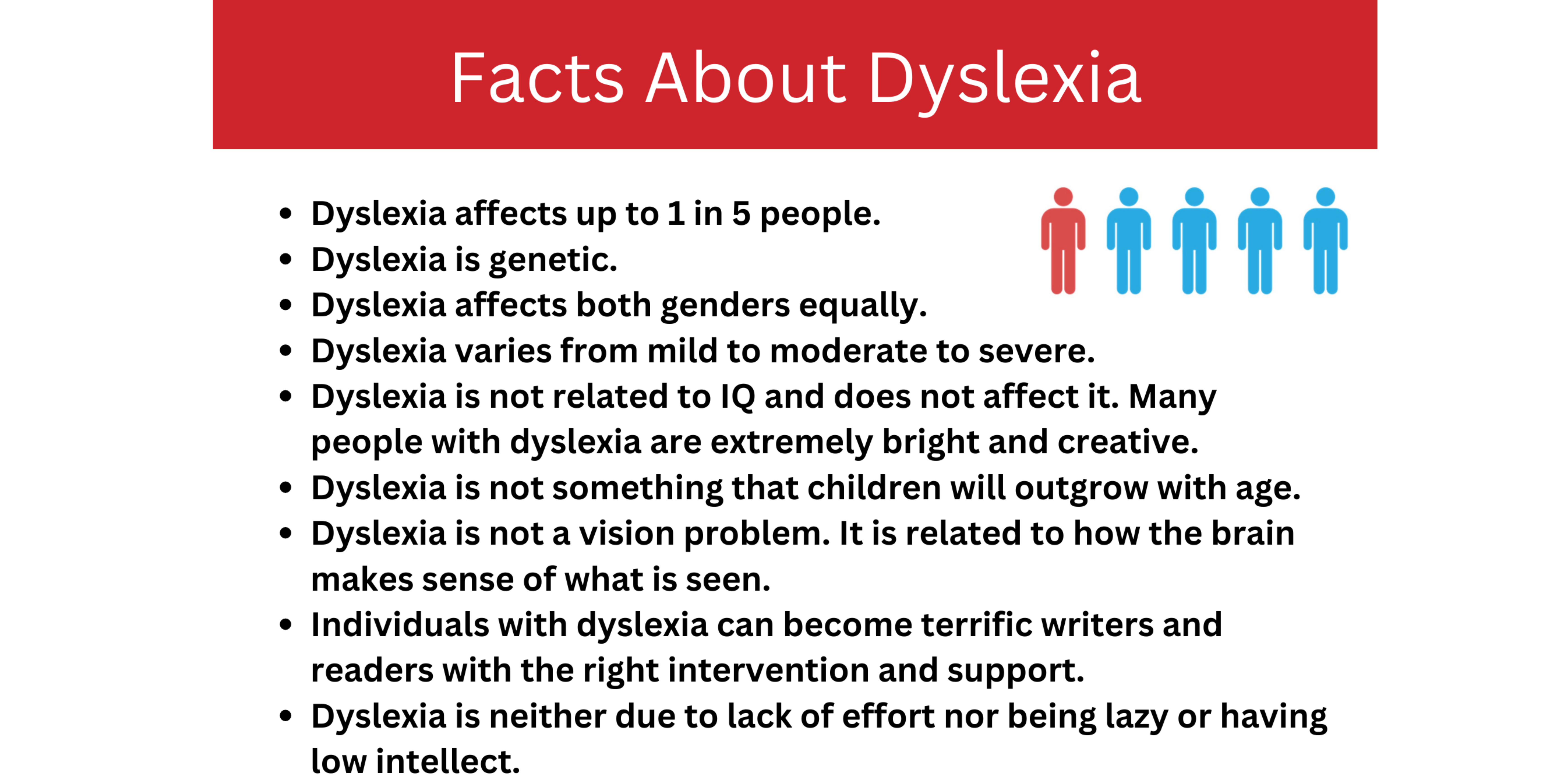
Dyslexia is a hereditary and lifelong condition, varying in severity from mild to severe. Additionally, it may co-occur with other learning difficulties.
The British Dyslexic Association has adopted the Rose (2009) definition of Dyslexia: “Dyslexia is a learning difficulty that primarily affects the skills involved in accurate and fluent word reading and spelling. Characteristic features of Dyslexia are difficulties in phonological awareness, verbal memory and verbal processing speed. Dyslexia occurs across the range of intellectual abilities. It is best thought of as a continuum, not a distinct category, and there are no clear cut-off points. Co-occurring difficulties may be seen in aspects of language, motor co-ordination, mental calculation, concentration and personal organisation, but these are not, by themselves, markers of Dyslexia.”

Dyslexia serves as an umbrella term encompassing various learning difficulties. Once we conduct an assessment of a child, we can identify the specific type of learning difficulty the child experiences. It can present as the following:
Dysgraphia
It is a learning difficulty in written expression, which affects the ability to write, primarily handwriting, but also coherence.
Both children and adults are impacted by this condition, which disrupts nearly every aspect of the writing process. This includes spelling, legibility, word spacing, sizing, and expression.
It is estimated that 5 to 20 percent of all children have some type of writing deficit like Dysgraphia.

Dyscalculia
Dyscalculia is a learning difficulty that hinders the processing and comprehension of mathematics. Symptoms can manifest as challenges with counting, basic mental mathematics, and even struggles with tasks like telling time and directions.
It impairs an individual’s ability to learn number-related concepts, perform accurate mathematic calculations, reason and problem solving, and perform other basic mathematic skills.

Dyspraxia
It is a condition affecting physical co-ordination. It causes a child to perform less well than expected in daily activities for their age, and appear to move clumsily.
It impacts both fine and gross motor skills, as well as motor planning and coordination. While cognitive abilities may be affected, it is important to note that it is not linked to intelligence.

Attention Deficit Hyperactivity Disorder (ADHD)
Attention Deficit Hyperactivity Disorder (ADHD) is a condition that affects a child’s behaviour. Children with ADHD can seem restless, may have trouble concentrating and may act on impulse.
Children with ADHD may be an introvert or extrovert and also have additional problems, such as sleep and anxiety disorders.

What Are The Factors That Contribute To Dyslexia In Individuals?

There can be various factors contributing to the challenges some individuals face in reading and writing. These factors may encompass a wide range, including lower intellectual abilities, lack of interest, emotional trauma, poor health, or physical disabilities such as hearing or visual impairments. However, between 1 in 8 and 1 in 10 people find it more difficult than others to read and write without any reason. These individuals experience a learning challenge referred to as dyslexia.
This learning difficulty affects people of all genders and backgrounds, and its severity can vary significantly from person to person, ranging from mild to moderate to severe.
Dyslexia is present in individuals from birth. Additionally, in some cases, it has been observed that after experiencing an accident or trauma that affects certain parts of the brain, a child may develop or acquire dyslexia.
Although extensive ongoing research is being conducted, the exact cause of dyslexia remains unknown. However, it often appears to have a hereditary component, running in families.
Dyslexia is not a disease; rather, it is a distinct learning style that is very much real.

Diagnosing Dyslexia
Signs And Symptoms Of Dyslexia

How To Identify Dyslexia In A Child?
- Delayed milestones; learns to walk and talk later than peers.
- More prone to infections.
- Unable to rhyme.
- Attention problem.
- Short attention span.
- Problems in memorising things.
- Dyslexic children spend more time and effort revising everything than regular children.
- Confusion between right, left, up and down.
- Reversal of words; b d p q
- Reading “on” as “no”, “no” as “on”.
- Skipping letters from words.
- Management issues.
- Issues retaining information.
- Problem in understanding directions.
- May have problems in fine and gross motor skills.
As we embark on the journey of raising our children, it is crucial to remain open-minded and vigilant about their development. Each child is a unique individual, with their distinct strengths and challenges. Among the challenges that may emerge is dyslexia, a learning difficulty that can have a profound impact on various aspects of a child’s academic and personal life. However, the good news is that with early identification and timely intervention, we can provide the necessary support and resources to help our children thrive.
How Dyslexia Affects People

Dyslexia, an invisible condition, has a significant impact on individuals beyond just reading and writing difficulties. Unfortunately, the lack of awareness about dyslexia results in misunderstandings and misconceptions from society. This leads to unfair judgments and accusations of laziness, making their challenges even harder to cope with.
Consequently, individuals with dyslexia often suffer emotionally, experiencing anxiety, depression, low self-esteem, frustration, and demotivation. To cope, some may withdraw and isolate themselves from others, while others may turn to harmful behaviours like substance abuse or violence. In severe cases, the emotional burden becomes overwhelming, and suicide may even be contemplated, emphasising the need for effective support.
However, with proper guidance and understanding, those with dyslexia can overcome obstacles, build self-confidence, and lead fulfilling lives, embracing their unique strengths and capabilities. Supporting individuals with dyslexia not only benefits their well-being but also enriches society by embracing diverse perspectives and talents.
SOPs For Assessment, Diagnosis And Remediation Of A Dyslexic Child
The initial session involves a crucial meeting with parents, providing comprehensive information and insights about dyslexia and other learning difficulties their child may face. Educators and professionals engage in an open discussion, offering a detailed overview of dyslexia, its characteristics, common signs, and potential impact on their child’s education. This fosters awareness and equips parents with valuable knowledge to recognise potential challenges early on.

Meeting with the parents to educate them about Dyslexia and other learning difficulties.
A skilled remedial therapist or educational psychologist conducts the screening and assessment process for a dyslexic child. They use specialised techniques and tools to evaluate the child’s academic abilities, identifying dyslexia and other learning difficulties. These professionals understand dyslexia’s complexities and its impact on reading, writing, and language skills. This process is crucial in helping the child reach their full potential, enabling targeted support and intervention from educators and parents to create an inclusive and empowering learning environment.

A Remedial Therapist conducting screening and assessment of a child at IDEAS.
After completing the screening and assessment process, a second meeting is scheduled with parents to discuss the results and create an Individualised Educational Plan (IEP) for the child. The IEP is a personalized roadmap with specific goals, strategies, and interventions based on the assessment results. This collaborative effort involves input from parents, educators, and other professionals supporting the child. Together, they identify suitable teaching methods, accommodations, and resources to foster academic growth and support the child’s social and emotional well-being in an inclusive learning environment.

Meeting conducted with parents to discuss the assessment results and to formulate an Individualised Educational Plan (IEP) in collaboration with them.
School owners, teachers, and all individuals working with Dyslexic students participate in awareness sessions. These sessions aim to provide valuable insights into Dyslexia, including understanding the specific strengths and weaknesses of Dyslexic children and appreciating their unique learning challenges. The overall goal is to create a supportive and nurturing atmosphere where Dyslexic children can thrive and reach their full potential. By promoting understanding and knowledge, the school becomes an inclusive space where every student receives tailored attention and assistance to succeed academically and personally.
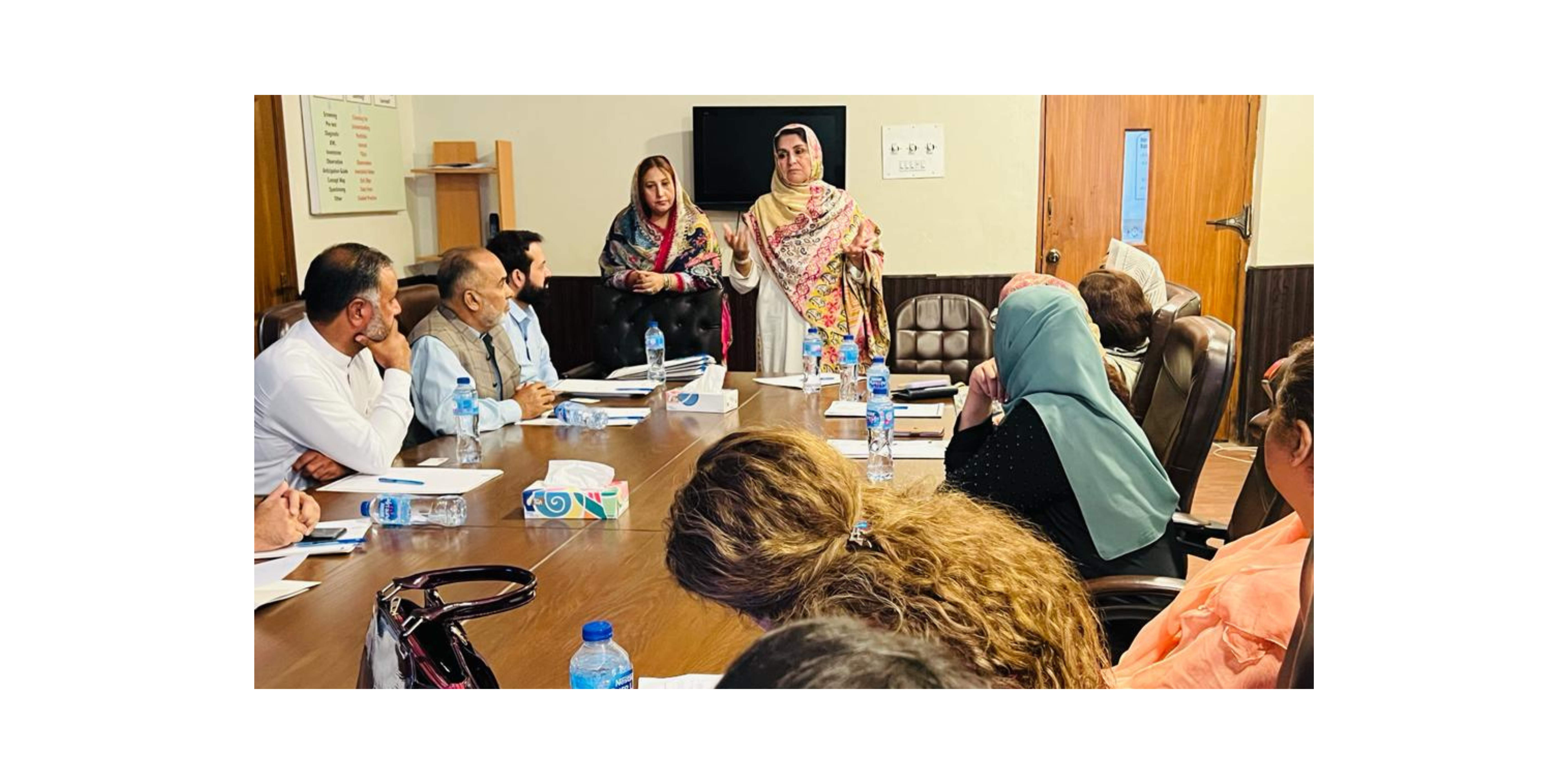
Piera takes initiative in raising awareness by organizing an informative session for private school heads, led by Mrs. Irum Mumtaz, IDEAS’ esteemed Remedial Therapist.
The child is paired with a dedicated remedial therapist for personalised one-to-one support. Sessions last for an hour each, focusing on the child’s specific needs and learning difficulties. To ensure progress, a minimum of three sessions per week is scheduled, providing consistent reinforcement of interventions and strategies. This tailored approach promotes academic growth and enhances learning abilities at the child’s individual pace. The one-to-one setting fosters a positive relationship between the child and therapist, contributing to overall development and confidence.
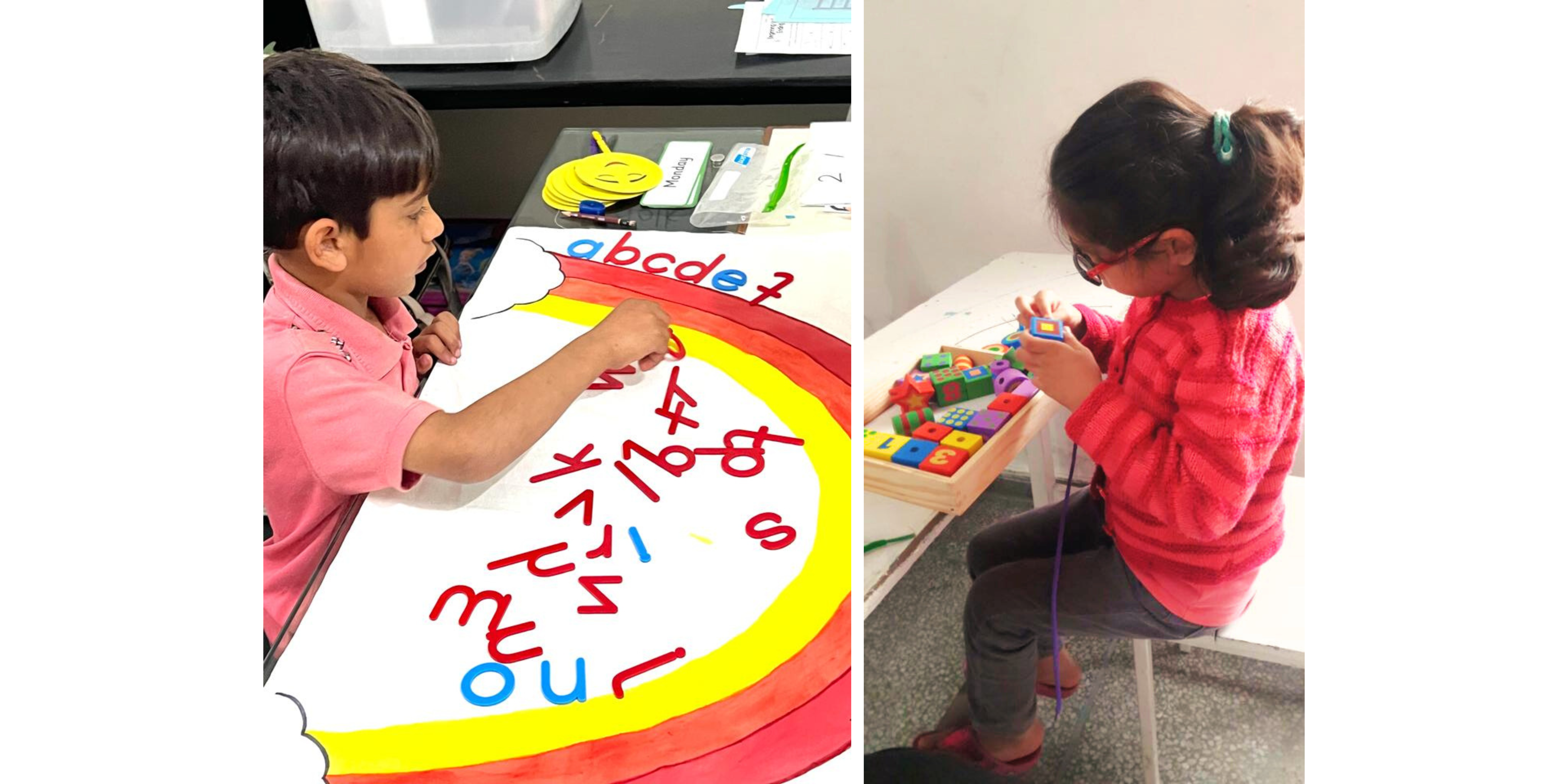
Children using multi-sensory games and tools during a Remedial Therapy session.
A strong support network is formed among the school, parents, and the remedial therapist, fostering the child’s academic and personal growth. Collaboratively addressing challenges and celebrating achievements boosts the child’s confidence and motivation, resulting in remarkable progress and success in their educational journey.
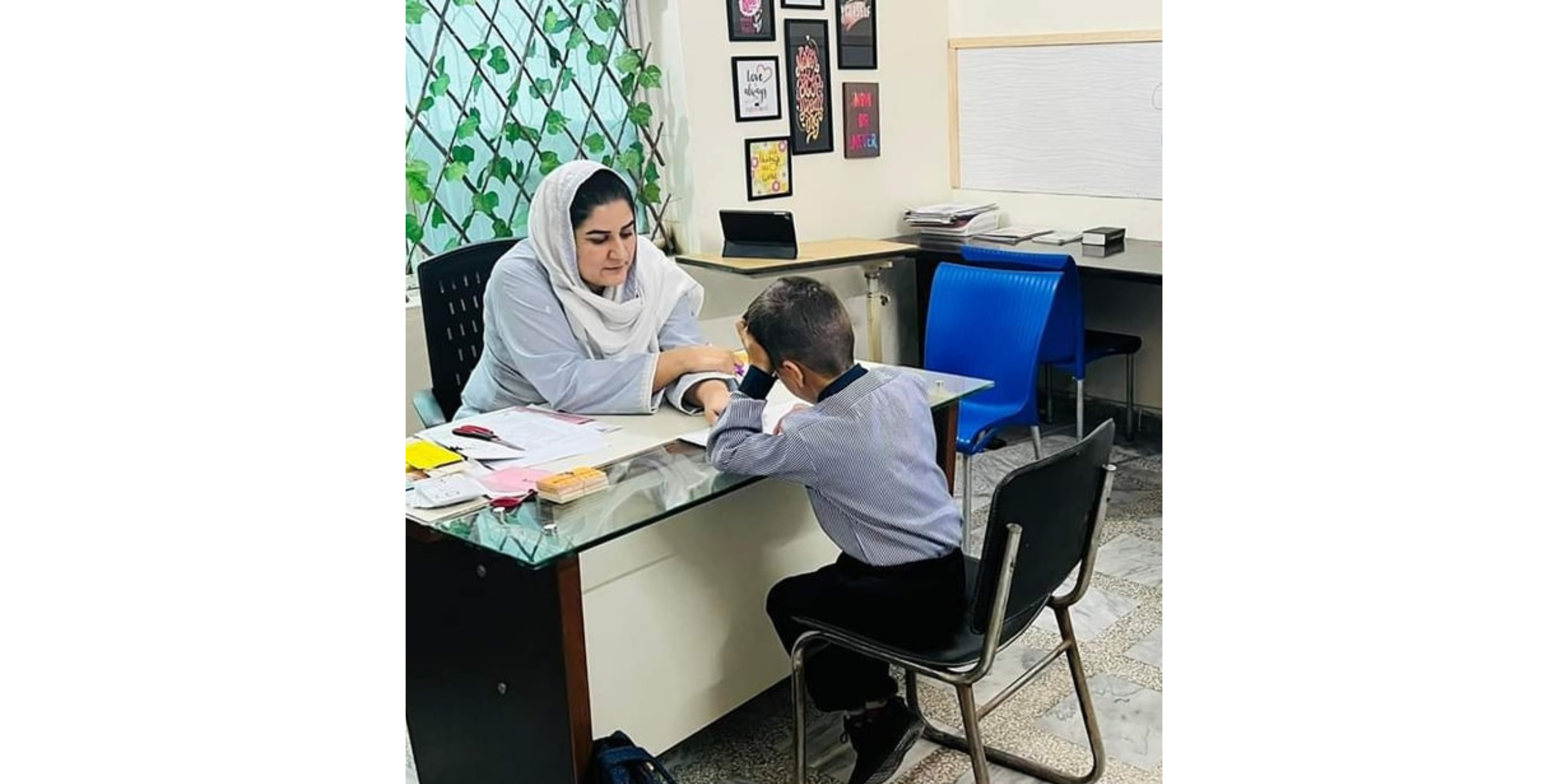
A Remedial Therapist conducting an assessment of a Dyslexic child at IDEAS.
After six months, a comprehensive assessment evaluates the child’s progress and improvement. Based on the results, the IEP is reviewed, and necessary adjustments are made to address specific needs and difficulties. Regular assessments and IEP updates demonstrate the educational team’s commitment to providing the best support and resources. This continuous evaluation fosters a positive and empowering learning environment, ensuring the child’s individual needs are met for long-term success and fulfilment.
Facts & Figures About Dyslexia
Based on international statistics, approximately 1 in 5 children, or roughly 20% of the global child population, experience learning difficulties. In Pakistan, this translates to around 12 million children out of a total of 60 million. Understanding this prevalence underscores the need for adequate support and resources to address the diverse needs of these children. With such a substantial number facing hurdles in Pakistan, it highlights the importance of raising awareness about learning differences and promoting inclusive educational practices.

The lack of awareness about Dyslexia and learning difficulties in Pakistan has led to the absence of government-operated institutes catering to Dyslexic children. The educational landscape mainly comprises regular and special schools, but both may not adequately address the unique challenges of Dyslexic students. This leaves Dyslexic children at a disadvantage. Bridging this gap requires enhancing awareness and understanding about Dyslexia across all levels of the education system to ensure they receive the necessary support to thrive academically and personally.
Info@ideaspakistan.pk
Irum Mumtaz 0333 5207679
Gulnaz Hammad Shah 0300 5555712
House No. 24, Street No. 4,
Gulshan Al-Huda Colony, Near Commodore School, Park Road Islamabad